
 MXN
 Spain & Europe · EUR
 United States · USD
NAD+ and glaucoma prevention
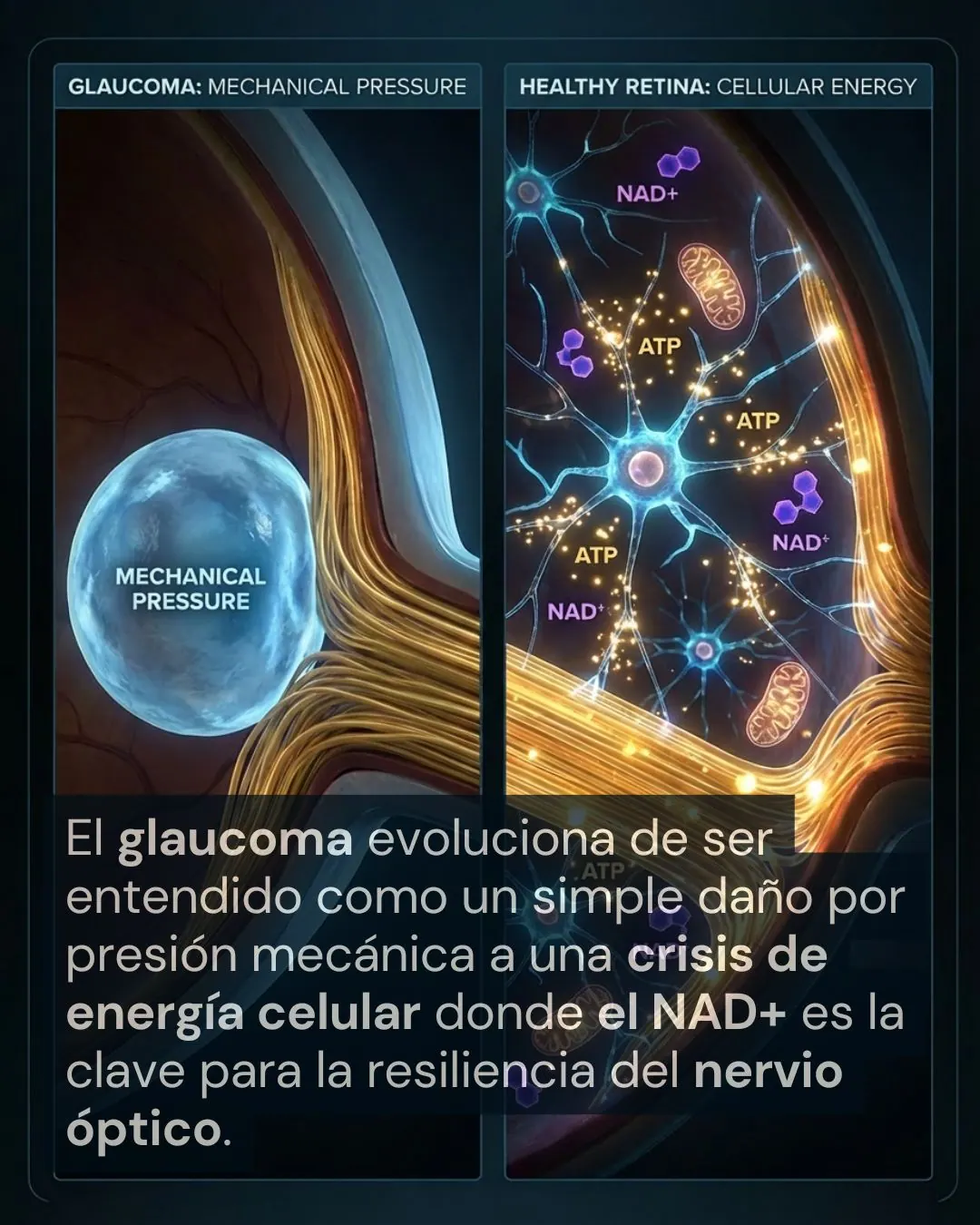
Modern medicine is undergoing a profound shift in the way it understands visual decline. For decades, glaucoma was diagnosed and treated almost exclusively through a mechanical lens: intraocular pressure rises, compresses the optic nerve fibres, and these die as a result of structural damage.
However, this model fails to explain why so many patients with normal pressure still lose their sight, or why others continue to worsen despite having their pressure under control. The answer is emerging from retinal neurobiology, specifically through the study of a fundamental molecule called nicotinamide adenine dinucleotide (NAD+).
To understand why NAD+ sits at the very centre of eye health, we need to look at the retina as a structure with a voracious metabolic demand. In biophysical terms, the retina is the most costly tissue to maintain in the human body, surpassing even the brain in its oxygen and glucose consumption per gram of tissue.
This demand is not optional. For instance, photoreceptors carry out a titanic metabolic effort during total darkness in order to maintain a constant flow of ions known as the dark current. NAD+ is the essential cofactor that allows mitochondria to convert nutrients into the chemical energy needed to keep electrical signalling running without pause.
Glaucoma and the Failure of Axonal Bioenergetics
When NAD+ levels begin to decline naturally with age, the retina enters a state of extreme vulnerability. In the context of glaucoma, the main players are the retinal ganglion cells. These neurons extend their axons the entire length of the optic nerve to connect with the brain.
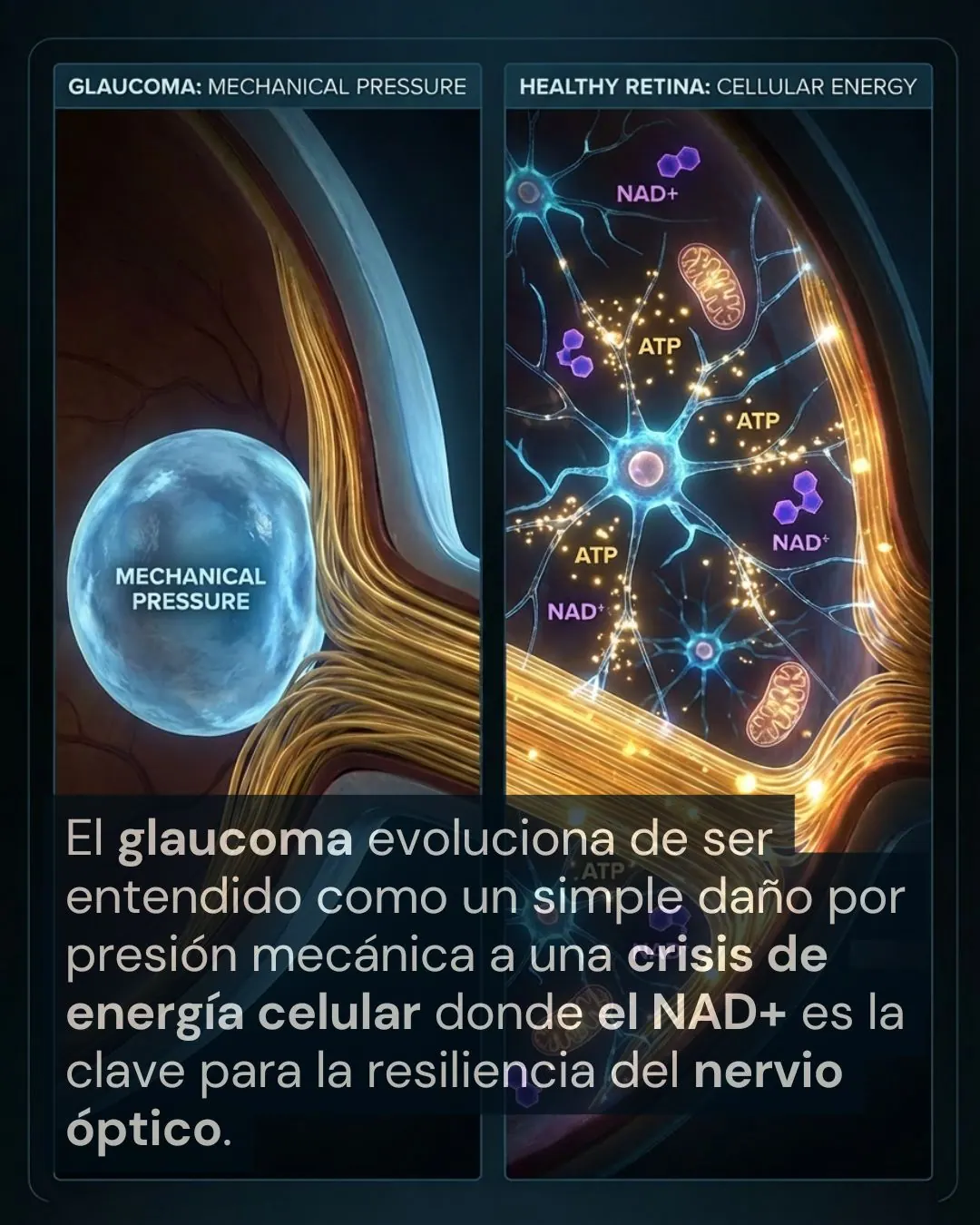
Their axons lack myelin insulation along their initial stretch, meaning they burn through a disproportionate amount of energy simply to maintain their ability to send signals.
If NAD+ becomes scarce, adenosine triphosphate (ATP) production falls and these cells enter a bioenergetic crisis. Before it becomes a loss of nerve fibres, glaucoma is a failure of the cell's engine.
The Salvage Pathway and NAD+ Regeneration
Scientific research has revealed that the retina has a recycling capacity through the salvage pathway. Rather than building all of its NAD+ from scratch, the eye prefers to take the by-products of cellular metabolism and reconstruct them.
In this process, an enzyme called nicotinamide phosphoribosyltransferase (NAMPT) acts as the system's rate-limiting component. With age, this recycling machinery loses efficiency, creating a metabolic gap that paves the way for neurodegeneration.
SARM1: The Mechanism of Programmed Axonal Fragmentation
One of the most important discoveries of the last decade is the role of the SARM1 protein. We now know that the death of an axon is not passive, but rather an active, programmed process.
SARM1 acts as an NAD+ sensor: while levels of this molecule remain high, the protein stays inactive. But when the balance between precursors and final NAD+ becomes disrupted, SARM1 switches on its enzymatic function and destroys the remaining NAD+ on a massive scale, triggering Wallerian degeneration, or fragmentation of the axon.
Parthanatos: Energy Depletion Through DNA Repair
Inside the neuronal cell body, genetic damage activates a repair enzyme called PARP1. Under conditions of chronic stress, as occurs in advanced glaucoma, PARP1 consumes NAD+ at a rate that outpaces the cell's synthesis capacity.
This frantic consumption depletes cellular reserves, halting mitochondrial respiration and driving the cell towards death through energy collapse, known as parthanatos. Photoreceptors are especially sensitive to this disruption.
Intervention Strategies and Metabolic Precursors
The possibility of intervening through supplementation with NAD+ precursors has opened up a new chapter. Substances such as nicotinamide have shown considerable protective capacity in animal models.
By improving mitochondrial metabolism, neurons become more resilient to elevated intraocular pressure. However, choosing the right precursor is critical. While nicotinamide mononucleotide (NMN) and nicotinamide riboside (NR) are effective at raising levels, their use in very elderly patients requires professional supervision.
Clinical Safety and Synergies with Other Biomodulators
Using therapeutic doses requires close attention to safety, particularly liver function, to avoid hepatotoxicity from saturation.
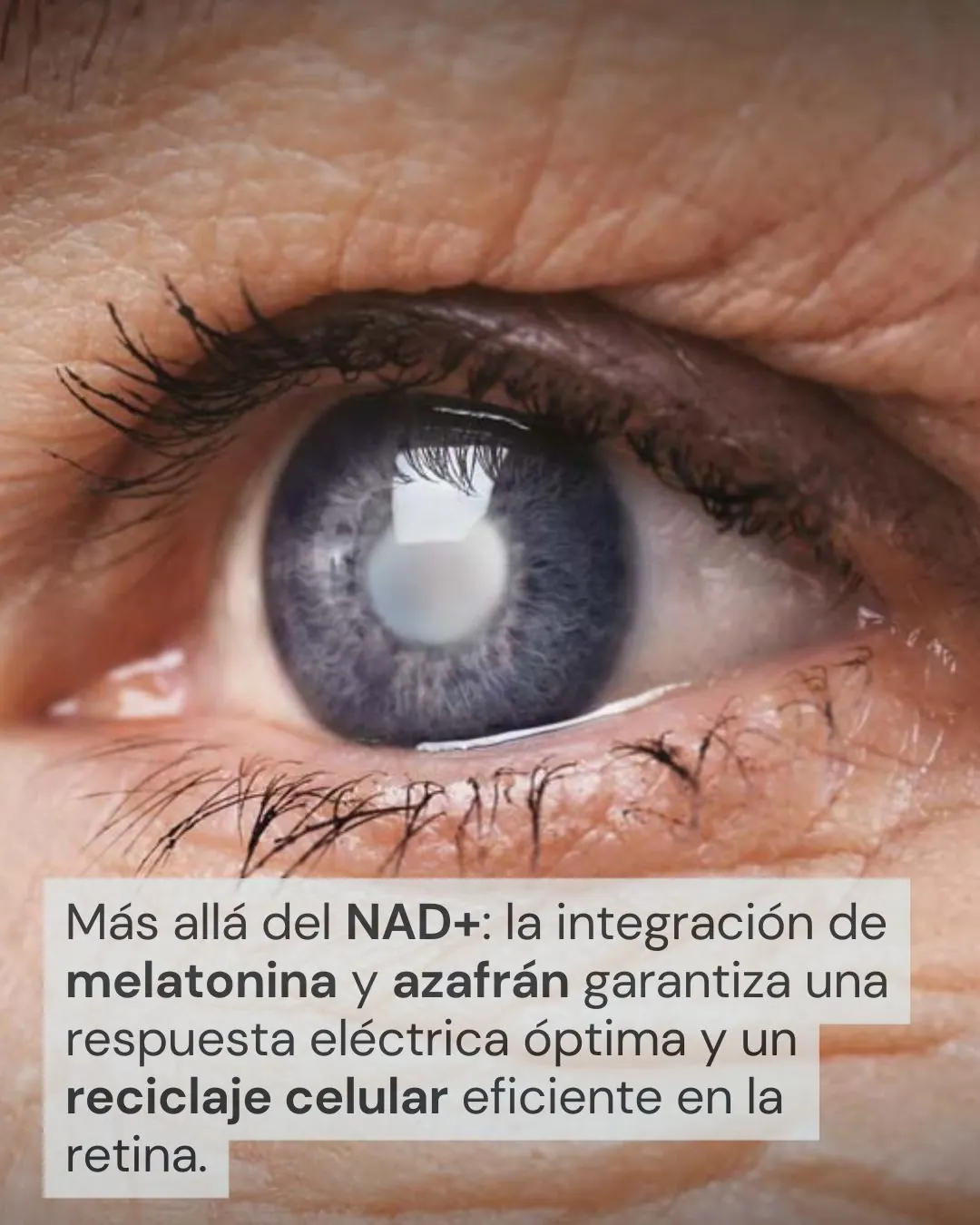
What's more, NAD+ doesn't work alone. Melatonin, by supporting cofactor recycling, and extracts such as saffron, used to optimise retinal electrical response, are key to the future of precision eye health.
Conclusions: Towards a Medicine of Metabolic Precision
The evolution in the study of NAD+ marks the start of an era in which managing glaucoma stops being a mechanical battle and becomes an intelligent management of cellular bioenergetics. When we ensure that neurons have the resources to repair their DNA, we turn vulnerable cells into resilient structures.
Preserving vision in the 21st century calls for a proactive approach that pays attention to mitochondrial infrastructure. By prioritising NAD+ homeostasis, we're not just addressing a disease; we're nourishing the eye's intrinsic capacity to keep functioning. Science has deciphered the retina's energy language; applying it is now up to us.
Main sources
Implications of NAD+ Metabolism in the Aging Retina and Retinal Degeneration
Neuroprotection in Glaucoma: NAD+/NADH Redox State as a Potential Biomarker and Therapeutic Target
Molecular mechanisms of cell death by parthanatos: More questions than answers
The role of NAD+ metabolism and its modulation of mitochondria in aging and disease
Update on Nicotinamide and Its Application in the Management of Glaucoma
Investigating Nicotinamide and Pyruvate for Glaucoma Neuroprotection
Our products:
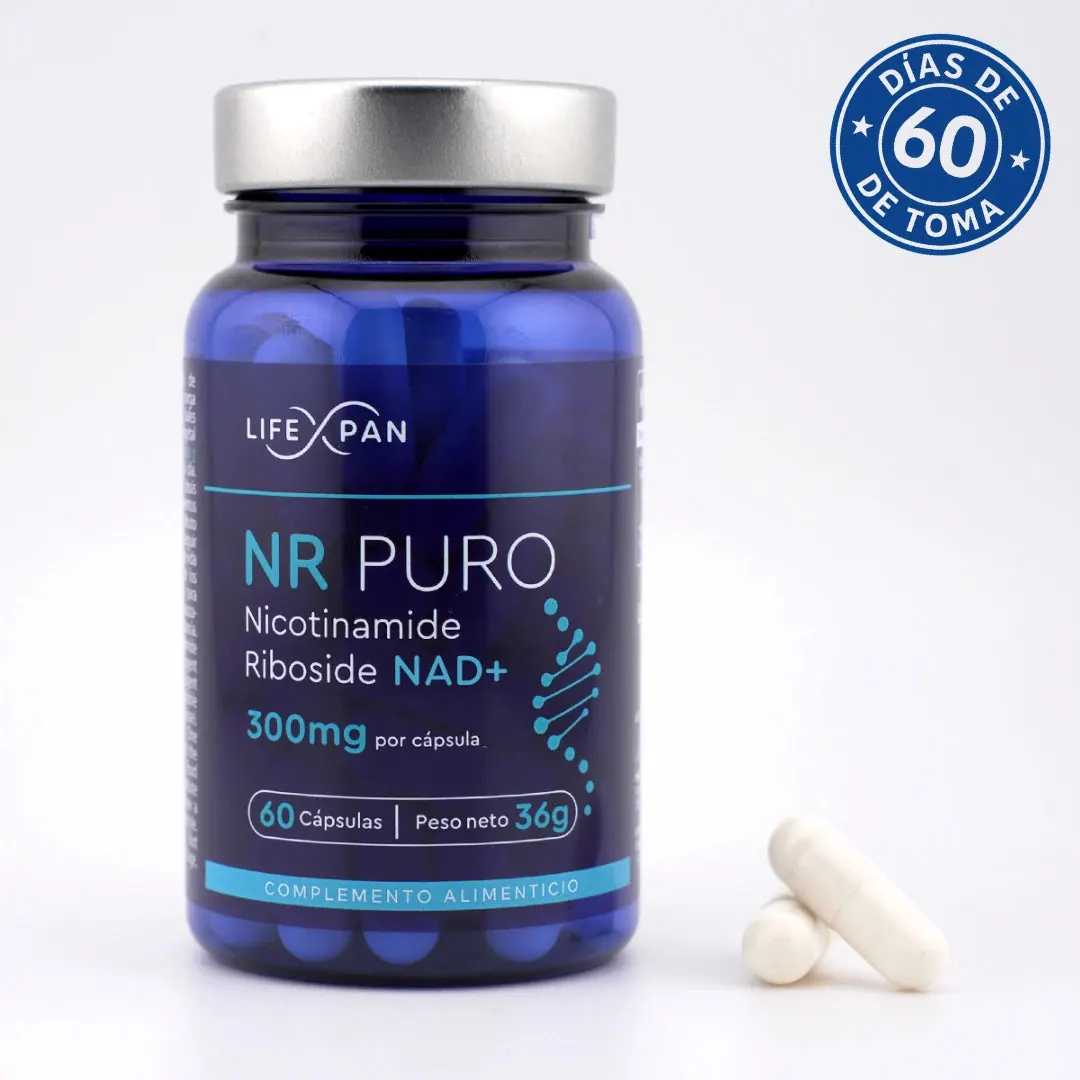
LifeXpan® NR 60 is an advanced and unique form of vitamin B3, designed to combat ageing and fatigue. By adding it to your daily routine, you can boost your NAD+ levels, essential for cellular energy and mitochondrial health, and help prevent conditions such as glaucoma, as we've just explained.
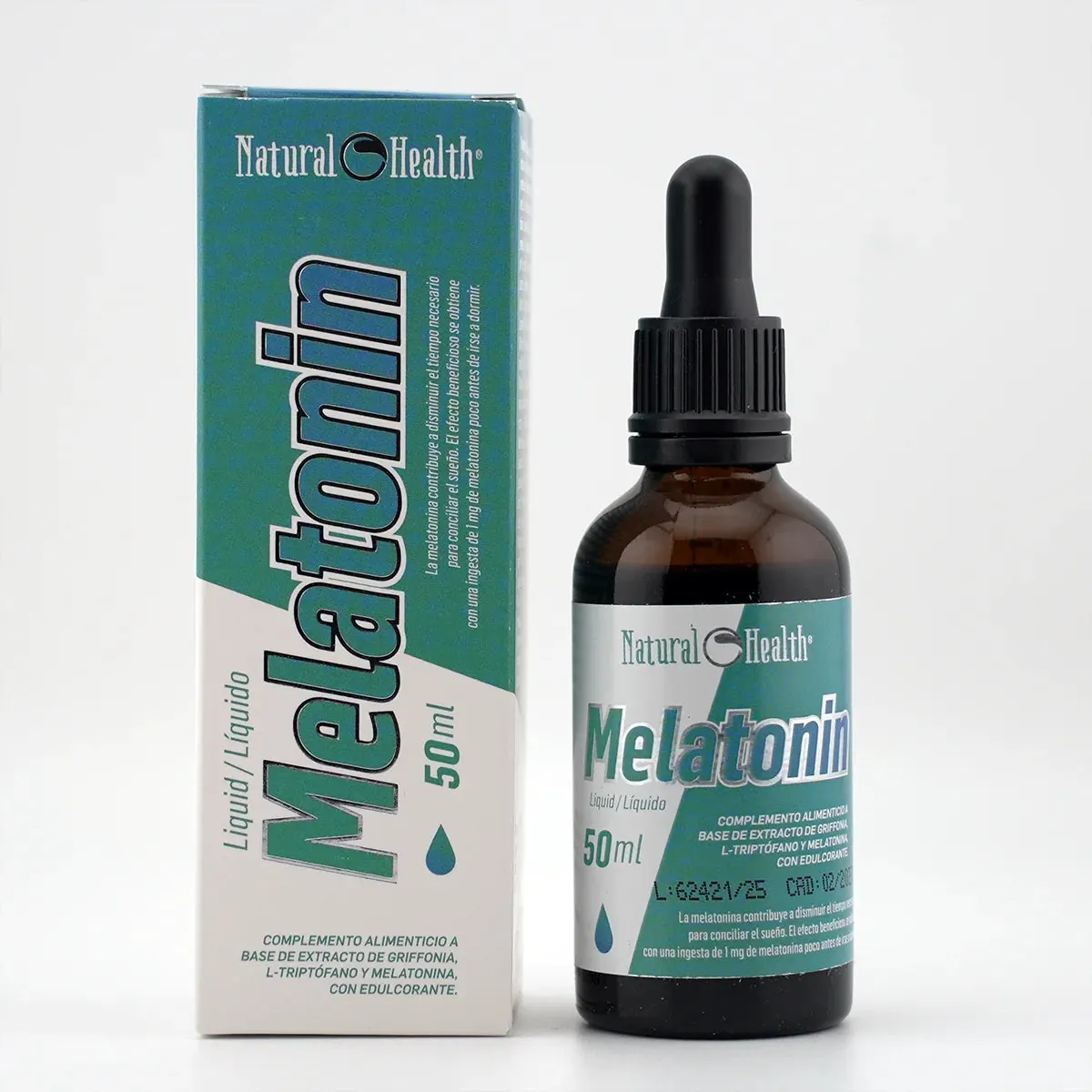
Natural Health Melatonin isn't just a sleep supplement; it's a biohacking tool designed to optimise your inner biology. While traditional capsules have to pass through the digestive system, our 50ml liquid formula guarantees ultra-fast absorption.
Retinal bioenergetics oxidative stress Glaucoma Neurodegenerative glaucoma mitochondrial homeostasis cellular longevity NAD+ Ocular neuroprotection nicotinamide riboside nicotinamide riboside Parthanatos retinal mitochondrial health SARM1