
 MXN
 Spain & Europe · EUR
 United States · USD
Habits and longevity: how many years a healthy lifestyle adds
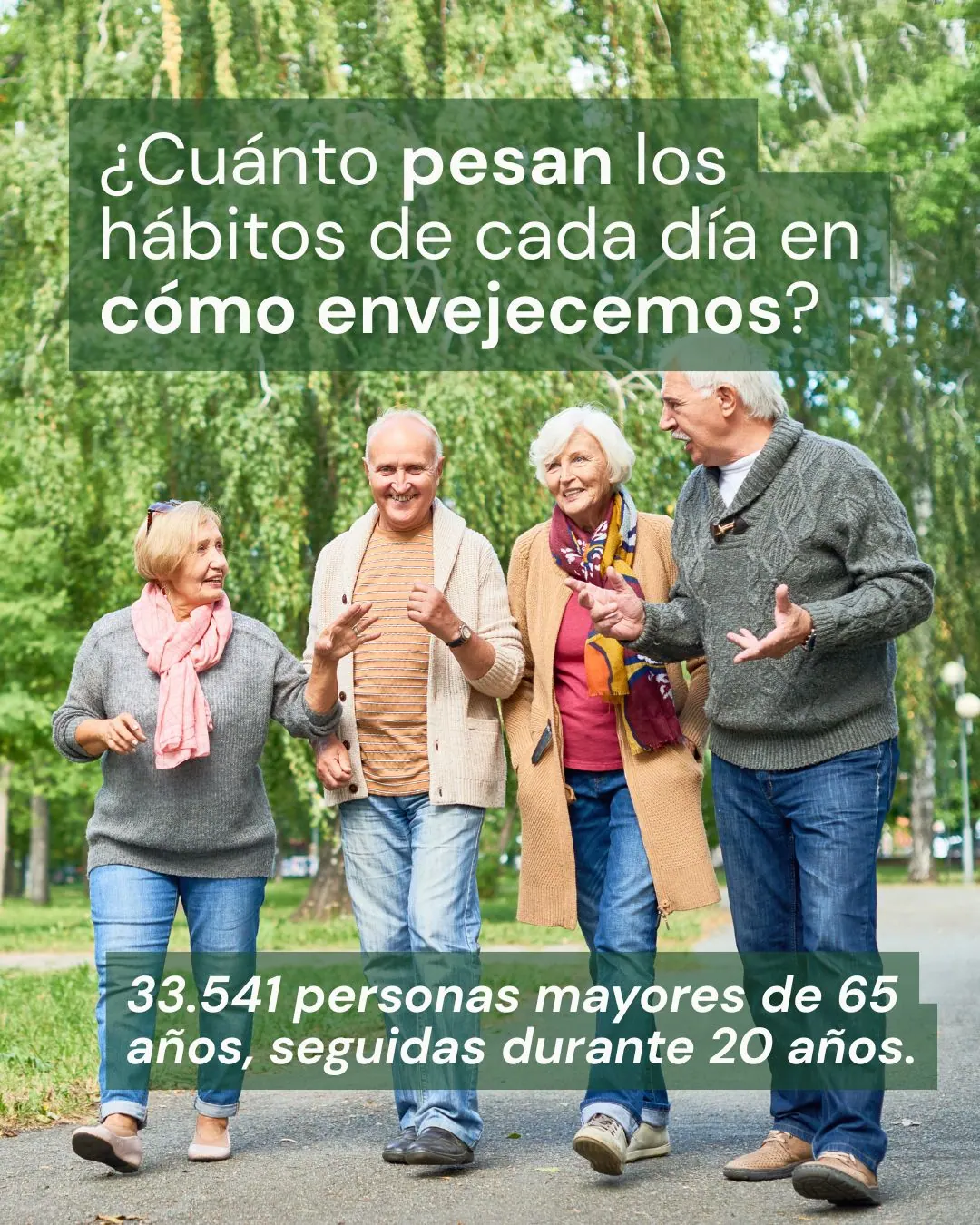
When longevity comes up, the focus usually goes to what's new: molecules, technologies, laboratory findings. But there's a more basic question that's almost never answered with numbers: how much do everyday habits really weigh?
A recent study followed more than 33,000 older adults for 20 years to try to answer it. In this article we'll tell you what it measured, what it found, and where its limits lie.
⏳ Longevity & Habits · 6 min read · Informative content
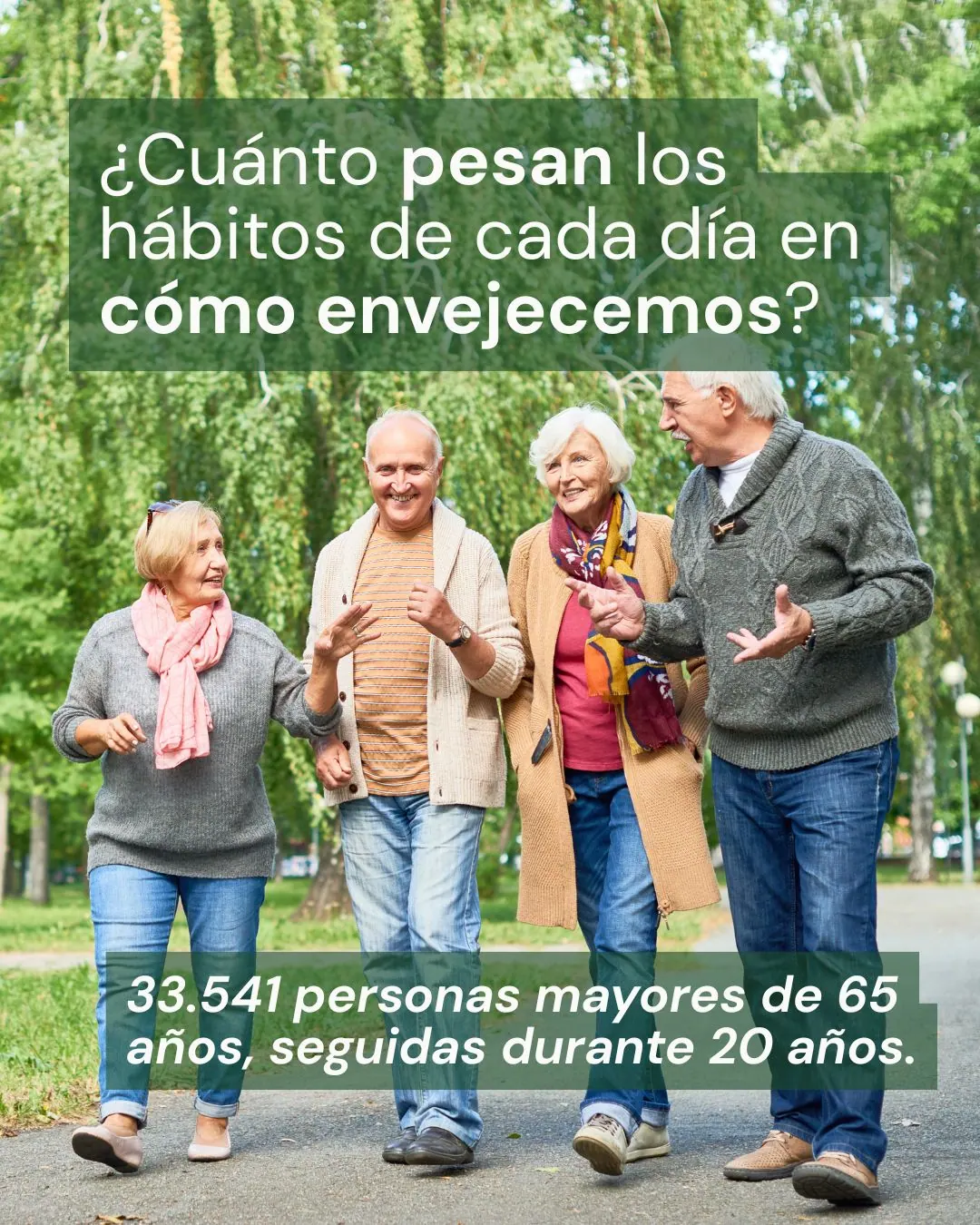
A 20-year follow-up of 33,541 people
The research, published under the title «How a healthy lifestyle mediates socioeconomic inequities in healthy ageing and life expectancies: A 20-year cohort of older adults», analysed 33,541 adults aged 65 or over from 23 provinces in China, and followed them for two decades.
The researchers measured two outcomes: all-cause mortality and what they called «unhealthy ageing», which took into account physical, cognitive, mental, visual and hearing function. They then divided participants by socioeconomic level (education, financial situation and occupation) and by lifestyle.
The four habits that were measured
The study didn't stop at a vague idea of «living healthily». It built a lifestyle score with four concrete elements:
1. Never having smoked.
2. Not drinking alcohol in excess.
3. Keeping up regular physical and leisure activity.
4. Following a healthy diet.

💡 In simple terms
The researchers compared those who met many of these habits with those who met few, and looked at how many years of life were associated with that difference.
Between 3 and almost 6 extra years of life
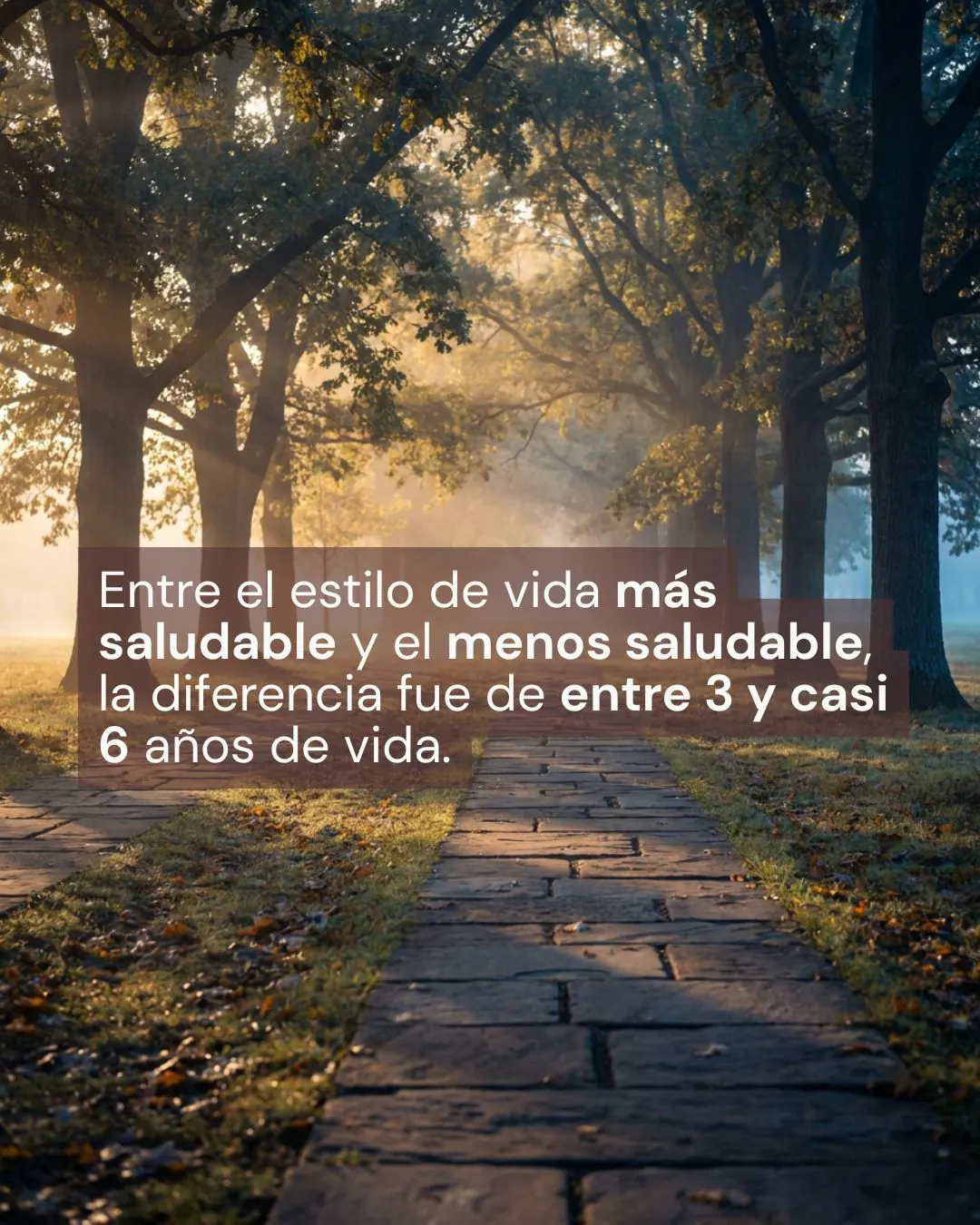
When comparing the group with the healthiest lifestyle to the least healthy one, the study estimated a difference in total life expectancy of 3.18 years in the low socioeconomic group, 3.76 years in the middle group and 5.65 years in the high group. In other words, in all three groups, living with healthier habits was associated with more years of life.
Healthy life expectancy from age 65 was also measured, which is the time lived without the limitations of unhealthy ageing. The difference was 1.40 years (low level), 2.73 years (middle) and 3.90 years (high).
🔬 Key fact
Habits weren't just linked to living more years: they were also linked to living more years with good physical and mental function. The difference in years of healthy life ranged from 1.4 to 3.9 years depending on the group.
How much do habits explain?
The study also found that people with a low socioeconomic level had a higher risk of dying and of ageing in worse conditions than those with a high level. And it asked what part of that gap is explained by lifestyle.
The answer: a healthy lifestyle explained 20.5% of the difference in mortality and 16.4% of the difference in unhealthy ageing. That's a significant part, roughly a fifth, but not everything.

What this study can't tell us
This is an observational study: it shows associations between habits and outcomes, but it doesn't prove that any single habit on its own causes those extra years. There are also other factors that influence how we age, and the study itself notes that habits only explain part of the differences.
What we can take from all this
Three ideas, with no promises:
1. The usual habits can be measured, and they count. Not smoking, moving regularly, watching your alcohol intake and eating well aren't empty advice: they were linked to specific years of life.
2. They matter for living longer and for living better. The difference also shows up in the years spent in good health.
3. They're the foundation. Built on top of this, longevity research looks at other pieces, such as NAD⁺, a molecule involved in cellular energy metabolism that declines with age, and its precursors, such as NR.
If you'd like to understand better what NR is and how the body uses it, we explain it step by step in our guide from scratch.
⚠️ An important note
If you take regular medication, or are pregnant or breastfeeding, consult your healthcare professional before taking supplements. Food supplements are not a substitute for a varied and balanced diet or a healthy lifestyle.
Conclusion
Longevity is built on unglamorous things: not smoking, moving, eating well, watching your alcohol intake. A 20-year follow-up of more than 33,000 people links them to between 3 and almost 6 extra years of life, and to more years in good health. They don't explain everything, but they're the foundation that everything else rests on.
Scientific references
How a healthy lifestyle mediates socioeconomic inequities in healthy ageing and life expectancies: A 20-year cohort of older adults. DOI: 10.1016/j.fmre.2025.10.004.
Informative content. This does not constitute an authorised health claim.
physical activity years of healthy life how many years a healthy lifestyle adds healthy ageing life expectancy healthy life expectancy healthy lifestyle habits for ageing well habits and longevity longevidad cellular longevity which habits extend life