
 MXN
 Spain & Europe · EUR
 United States · USD
The ageing gut: microbiome, inflammaging and longevity
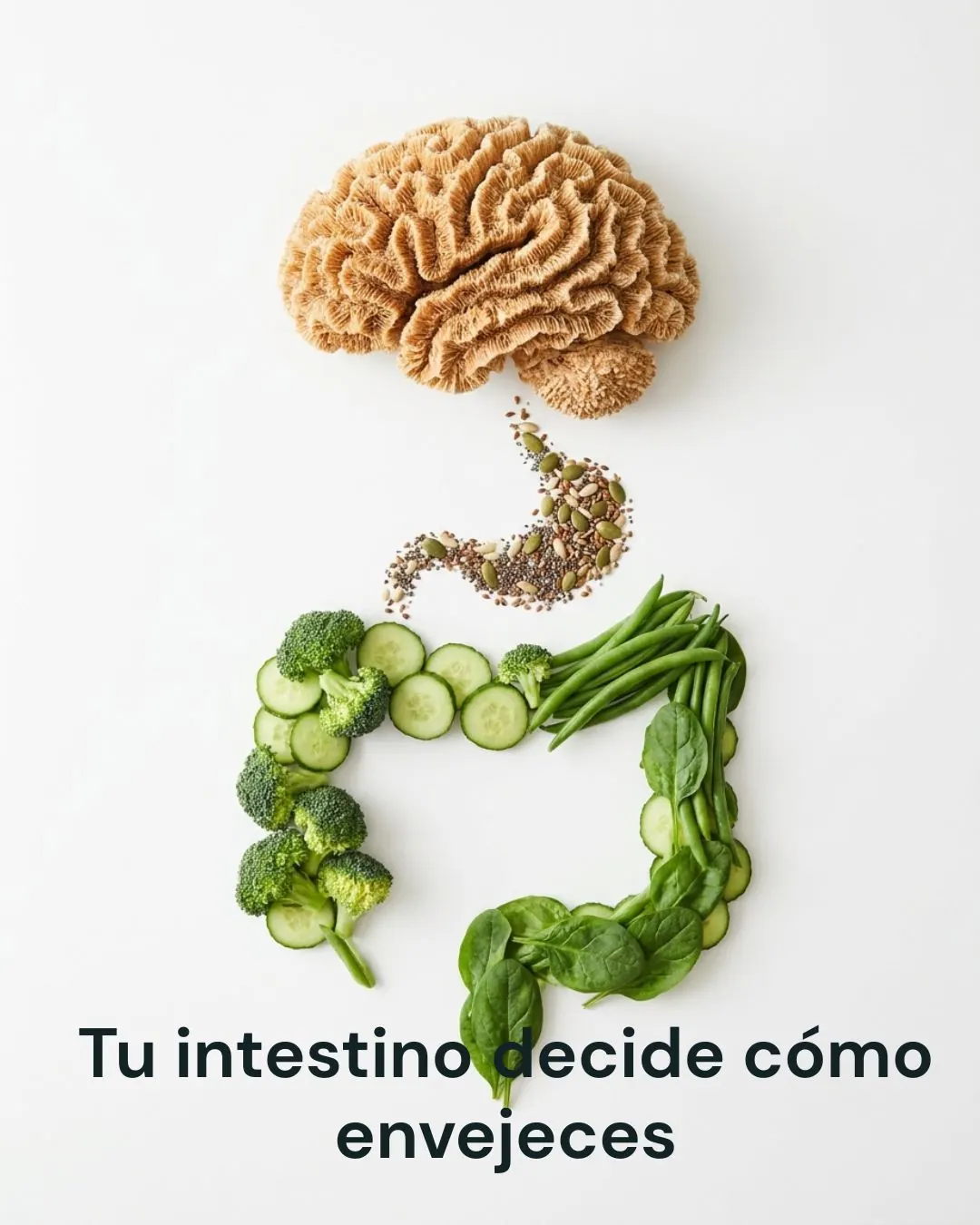
There's an organ in your body that medicine ignored for decades. It's not the heart, the brain, or the liver. It's in your gut. And according to the most recent science, it's one of the most powerful predictors of how you're going to age.
A study analysing more than 10,000 gut samples showed that 80-year-olds with a microbiota similar to that of 40-year-olds have lower systemic inflammation and better cognitive function. The microbiome doesn't just predict gut health: it predicts the health of the whole body.
We're talking about the gut microbiome: the ecosystem of trillions of bacteria, viruses, fungi and other microorganisms that live in your digestive tract. For a long time, it was thought that its role was limited to helping with digestion. Today we know it goes far beyond that: the microbiome regulates systemic inflammation, modulates the immune system, produces metabolites that affect the brain and, according to recent studies, can determine whether you age with frailty or with vitality.
In this article, we explain what happens to your microbiome as you age, why this decline speeds up the ageing of the whole body, and what you can do — through habits and science — to reverse it.
🦠 Longevity & Microbiome · 7 min read · Backed by science
The gut: far more than a digestive tube
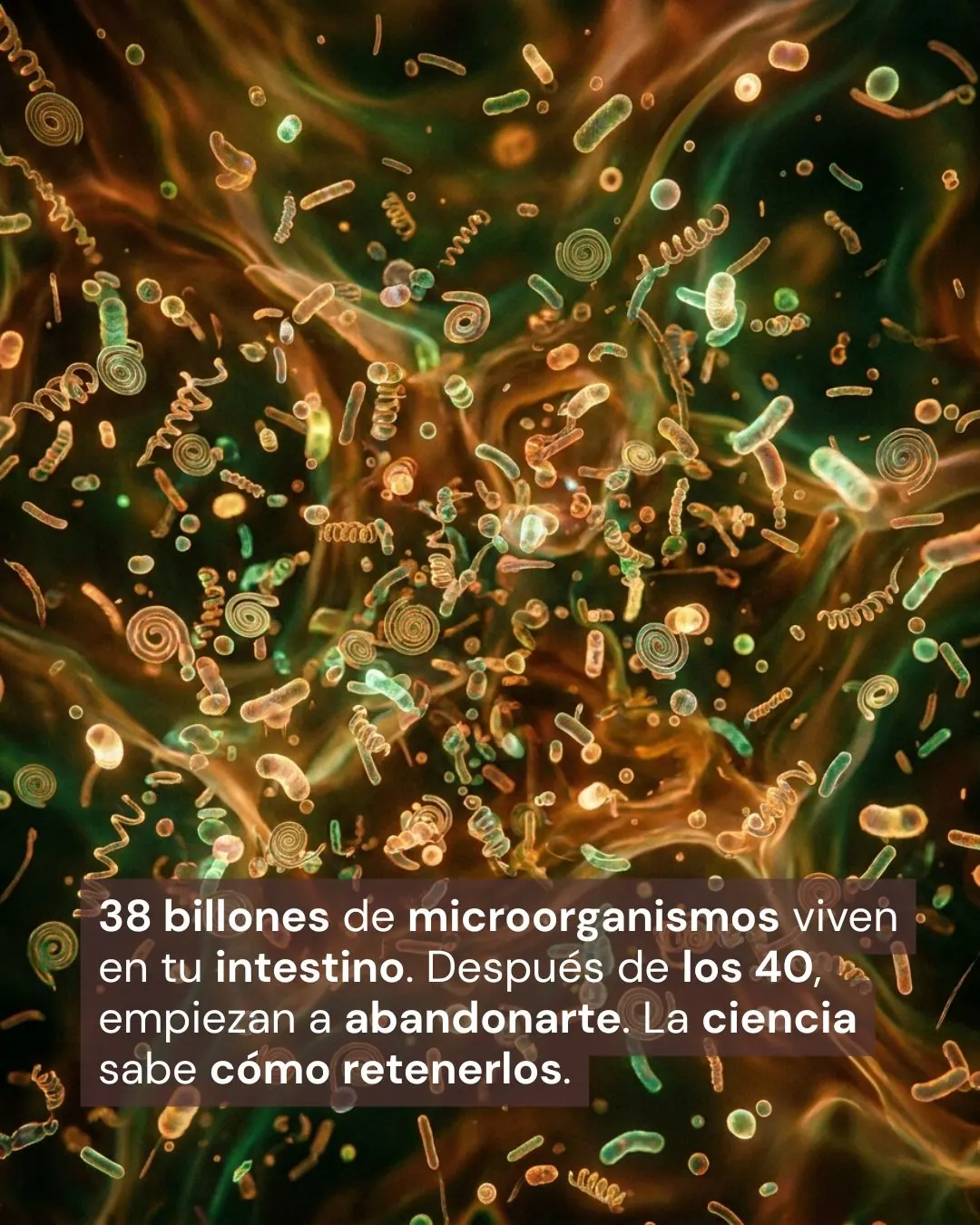
The human gut is home to between 38 and 100 trillion microorganisms, with a total weight that can exceed one kilogram. This microbial community — which scientists call the gut microbiome — is not a passive passenger in our body. It's a functional organ with its own identity, capable of producing more than 9,000 active enzymes that the human body couldn't make on its own.
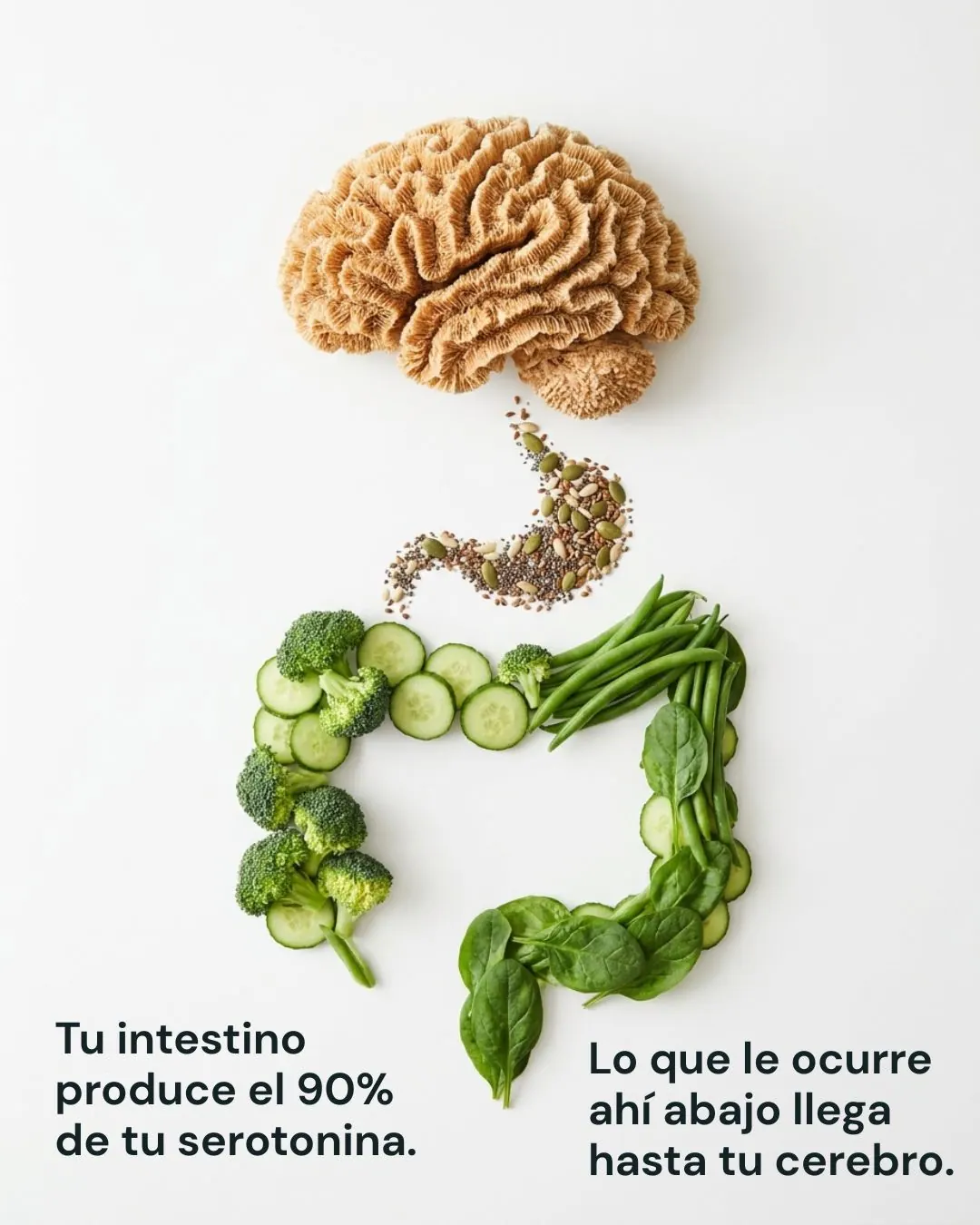
These bacteria transform food remnants into short-chain fatty acids such as butyrate, acetate and propionate — metabolites with anti-inflammatory properties that nourish gut cells, regulate the immune system and protect the intestinal barrier. They also synthesise B vitamins, vitamin K and neurotransmitters such as serotonin — yes, 90% of the serotonin in your body is produced in the gut.
But there's something even more relevant to the topic at hand: the microbiome ages. And when it does, it drags the whole body along with it.
What happens to your microbiome from age 40 onwards
The microbiome of a 40-year-old is not the same as that of a 25-year-old. With age, very specific and well-documented changes take place in the composition of the gut microbiota:
| What decreases with age | What increases with age |
|---|---|
| Diversity of bacterial species | Opportunistic pathogenic bacteria |
| Butyrate-producing bacteria | Intestinal permeability |
| Bifidobacterium and Lactobacillus | Low-grade systemic inflammation |
| Akkermansia muciniphila | Pro-inflammatory metabolites (TMAO) |
This decline is neither inevitable nor uniform — there are 80-year-olds with a microbiota similar to that of someone aged 40, and their health profile reflects it — but it is the dominant trend in Western populations, and its consequences are far-reaching.
🔬 Key fact
A study analysing more than 10,000 gut samples showed that 80-year-olds with a microbiota similar to that of 40-year-olds have lower systemic inflammation and better cognitive function. The microbiome doesn't just predict gut health: it predicts the health of the whole body.
Leaky gut: the door that shouldn't open
One of the most important — and least known — mechanisms by which an aged microbiome harms the body is so-called leaky gut. Under normal conditions, the intestinal wall acts as a selective barrier: it allows nutrients to pass into the bloodstream while blocking bacteria, toxins and unwanted particles.
When the microbiota deteriorates and butyrate-producing bacteria — the main fuel for the cells that make up that barrier — decline, the tight junctions that seal the intestinal wall weaken. The result is increased permeability: bacteria and bacterial fragments leak into the bloodstream, constantly activating the immune system.
This chronic activation of the immune system has a name in longevity science: inflammaging. A low-grade, silent systemic inflammation that causes no pain or obvious symptoms, but that damages tissues, accelerates cellular ageing and underlies the major chronic diseases of adulthood: Alzheimer's, cardiovascular disease, type 2 diabetes and sarcopenia, among others.
💡 In simple terms
Imagine the wall of your gut as a fine mesh. Under optimal conditions, only things of the right size get through. When the microbiota becomes unbalanced, the mesh stretches and holes open up. What passes through those holes activates your immune system — which stays permanently switched on, wearing itself out and causing collateral damage throughout the body.

The secret of the centenarian microbiome
If there's one thing science has learnt from studying centenarians, it's that their longevity carries a highly recognisable gut signature. A study published in Nature Aging involving 1,575 people aged between 20 and 117 described what researchers called "youthful signatures" of the microbiome in centenarians: greater species uniformity, a lower presence of pathobionts, and sustained microbial stability over time.
Two bacteria appear consistently in the microbiome of those who reach advanced age in good health:
🦠 Akkermansia muciniphila: known as the "anti-ageing" bacterium, it is abundant in centenarians and scarce in people with premature ageing. It renews the mucus layer that protects the intestinal wall, reinforcing the barrier and reducing permeability.
🦠 Butyrate-producing bacteria (such as Faecalibacterium prausnitzii and Roseburia intestinalis): butyrate is the gut's main anti-inflammatory agent. It nourishes the cells of the epithelium, regulates the immune response and protects against inflammaging. Its absence is one of the most consistent markers of accelerated intestinal ageing.
What's more, a 2025 study published in npj Biofilms and Microbiomes isolated a strain of Lactobacillus plantarum from the microbiota of centenarians, whose metabolite — mesaconic acid — showed anti-inflammatory and anti-ageing effects in animal models, opening up a new line of research into the therapeutic potential of the microbiome of the longest-lived.
🔬 Key fact
In 2025, Spain's CSIC published a study of people over 55 that linked different microbiota profiles with variations in cortical areas related to memory, language and emotional processing. The gut-brain axis is not a metaphor: it is a bidirectional biological highway with direct implications for cognitive ageing.
The gut-brain axis: ageing from within
One of the most striking discoveries of the last decade is that the gut and the brain communicate constantly and bidirectionally via the vagus nerve, the immune system and the metabolites produced by bacteria. This gut-brain axis explains why a deteriorated microbiome affects not only digestion or general inflammation, but also cognitive function, mood and the risk of neurodegenerative disease.
Neuroinflammation — chronic inflammation in brain tissue — is directly linked to intestinal dysbiosis. When the gut becomes permeable and bacterial fragments reach the bloodstream, some of that inflammatory signal reaches the brain, contributing to age-related cognitive decline and increasing the risk of Alzheimer's and Parkinson's disease.
What you can do to look after your microbiome from age 40 onwards
The good news is that the microbiome is one of the most plastic and modifiable systems in the body. Unlike your genome, which you can't change, the microbiome responds relatively quickly to changes in diet, lifestyle and supplementation.
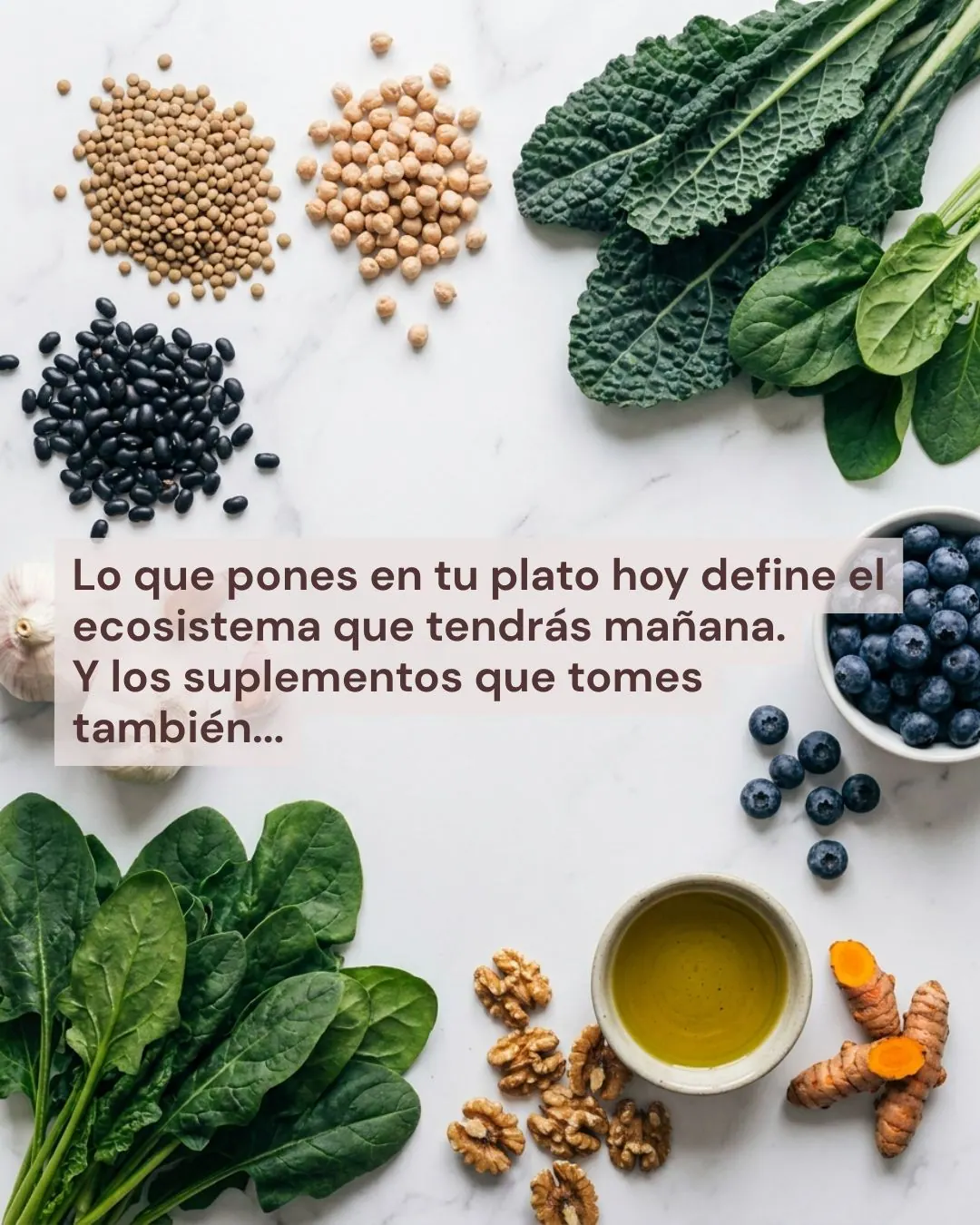
Fermentable fibre as a priority. Beneficial bacteria feed on fibre — especially the so-called prebiotics: inulin, FOS, resistant starch. Pulses, leafy greens, garlic, onion, leek, artichoke, plantain and oats are some of the most powerful sources. Fibre diversity feeds bacterial diversity.
Polyphenols: food for the best bacteria. Curcumin, the polyphenols in extra virgin olive oil, flavonoids from berries and resveratrol from red grapes have been shown in clinical studies to increase the presence of Akkermansia muciniphila and butyrate-producing bacteria, while reducing pro-inflammatory pathobionts.
Omega 3 and its effect on the gut barrier. The EPA and DHA fatty acids found in omega 3 have a direct effect on the integrity of the intestinal wall and on reducing inflammaging. Recent studies place them among the most effective modulators of the microbiota in people over 40.
Magnesium and gut inflammatory regulation. Magnesium plays a role in regulating intestinal motility and in modulating the inflammatory response at the mucosal level. Its deficiency — highly prevalent in Western populations — is associated with increased intestinal permeability and dysbiosis.
Cutting back on ultra-processed foods and alcohol. Both are the most well-documented enemies of microbial diversity. Excess simple sugars, saturated fats and food additives disrupt the bacterial balance within days — and recovery can take weeks.
✨ The key to microbiome and longevity
We don't all age the same way, because our internal ecosystems don't age the same way. The gut microbiome is one of the few biological systems you can actively and measurably change. What you give it each day — in the form of food, supplements and habits — determines the type of inflammation circulating through your body and, ultimately, the speed at which your tissues age.
Conclusion: your gut is ageing. But you can influence how it does.
Longevity science has taken decades to give the gut the attention it deserves. Today there's no doubt: the microbiome is a central player in the ageing process, and its decline is one of the most powerful mechanisms behind inflammaging — that silent inflammation which speeds up the ageing of the whole body.
Centenarians show us that it's possible to maintain a youthful microbiome well into your 100s. It isn't pure genetics: it's the result of decades of a diet rich in fibre and polyphenols, low in ultra-processed foods, and a lifestyle that protects bacterial diversity.
Starting to look after your microbiome at 40 or 50 isn't too late. It's exactly the moment when that investment pays off the most biologically.
🦠 Support your microbiome with LifeXpan®
Three molecules with direct evidence on microbial diversity, the gut barrier and the reduction of inflammaging:
🐟 Omega 3 EPA/DHA: Modulates the composition of the microbiota and strengthens the integrity of the gut barrier.
🌿 Cursol® Curcumin: Increases the presence of Akkermansia muciniphila and butyrate-producing bacteria. Reduces pro-inflammatory pathobionts.
🔩 Magnesium Bisglycinate: Regulates intestinal motility and modulates the inflammatory response at the mucosal level.
Scientific references
Wilmanski, T. et al. (2021). Gut microbiome pattern reflects healthy ageing and predicts survival in humans. Nature Metabolism, 3, 274–286.
Sommer, F. et al. (2025). Life-long microbiome rejuvenation improves intestinal barrier function and inflammaging in mice. Microbiome, 13, 89.
Alcaraz, J. et al. (2026). Chronic intestinal immune activation reveals separable impacts of inflammation and barrier loss on hallmarks of ageing. PLOS ONE.
CSIC (2025). Observational study on microbiota profiles and cortical areas in adults over 55. Instituto de Neurociencias, CSIC.
Palmas, V. et al. (2022). Gut microbiota markers and dietary habits associated with extreme longevity in healthy Sardinian centenarians. Nutrients, 14(12).
Tseng, C.H. & Wu, C.Y. (2025). From dysbiosis to longevity: a narrative review into the gut microbiome's impact on aging. Journal of Biomedical Science, 32.
akkermansia muciniphila longevity gut bacteria centenarians butyrate gut chronic inflammation how to improve your microbiota to live longer gut dysbiosis and ageing gut-brain axis longevity what is inflammaging leaky gut ageing leaky gut systemic inflammation microbiome from age 40 gut microbiome and ageing microbiome and cognitive decline microbiota and longevity nutrition what happens to the microbiome with age microbiota supplements for adults 40+