
 MXN
 Spain & Europe · EUR
 United States · USD
Vitamin C and D in autumn: what each one really does for your immune system
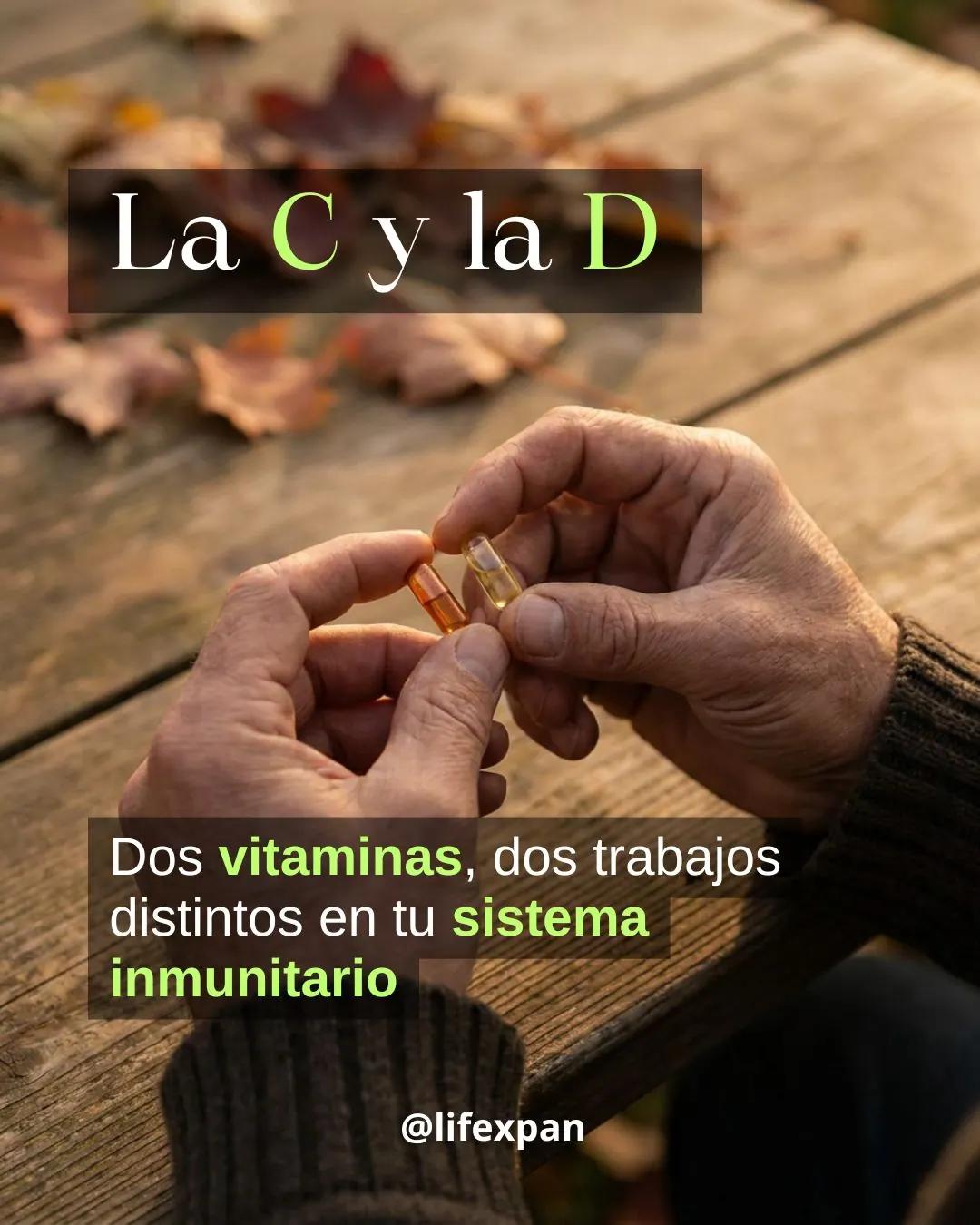
Every autumn, the same thing happens: suddenly, everyone around you seems to have a cold. And the answer is almost always the same: "take some vitamin C". But that phrase lumps together two nutrients that don't do the same job. Vitamin C and vitamin D act on the immune system in different, complementary ways — and understanding that difference is what allows you to use them properly, rather than just taking them out of habit.
Here, we'll look precisely at what each one does in your body, why autumn is when they're most needed, and how to take them correctly.
🍂 Immune system & Autumn · 7 min read · General information
Two vitamins, two different jobs
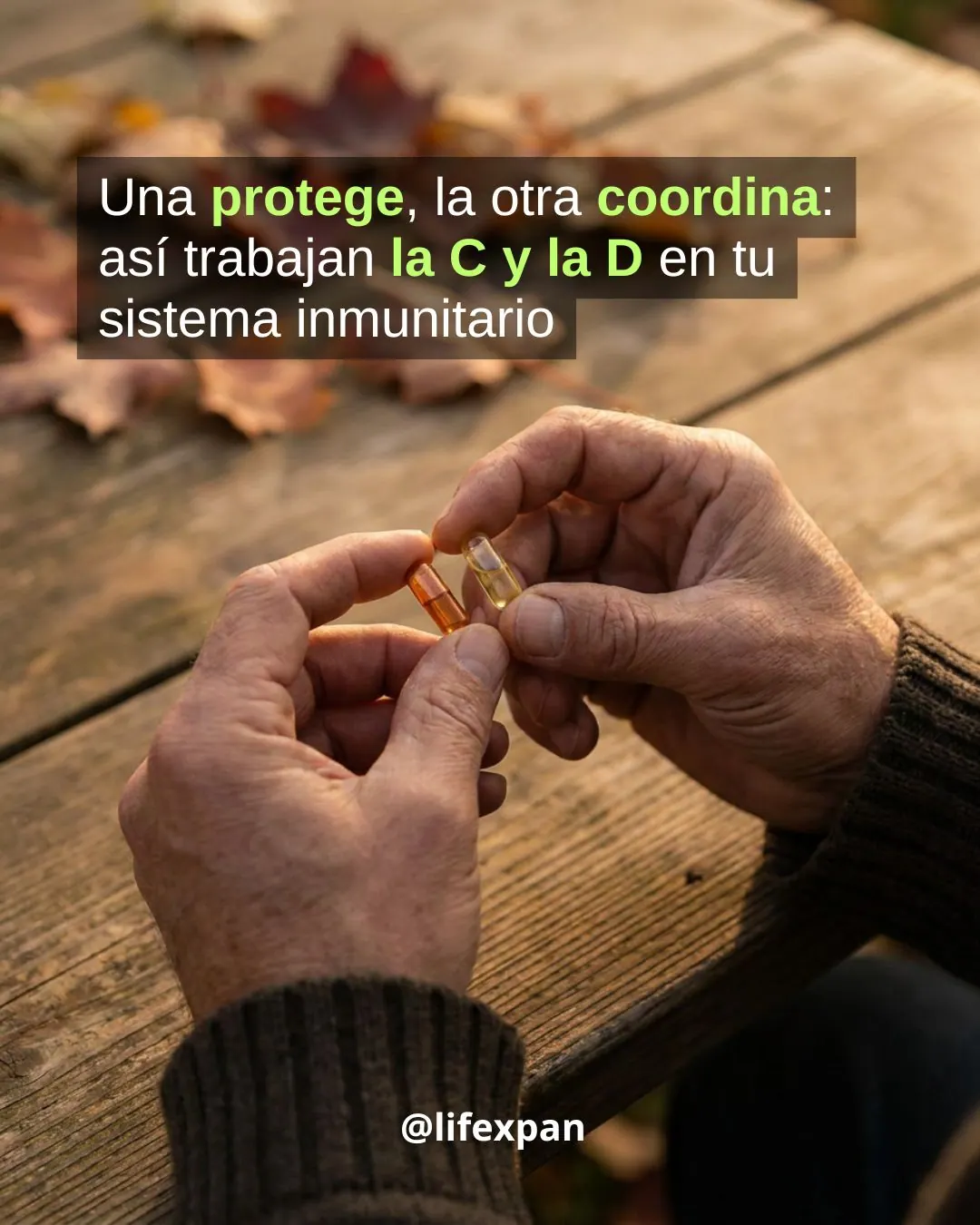
It's easy to think of vitamin C and vitamin D as interchangeable — both "for your immunity". But they perform different roles within the immune system. One acts mainly as protection: defending cells and mucous membranes from everyday wear and tear. The other acts as regulation: it's directly involved in how your defences are activated and coordinated. Looking at them separately is what helps us understand why autumn puts both to the test, albeit for different reasons.
Vitamin C: the antioxidant shield
Vitamin C contributes to the normal function of the immune system, partly by protecting cells from the oxidative stress generated by the immune response itself. But its role doesn't end there: it also contributes to normal collagen formation, the protein that gives structure to skin, blood vessels and — most relevant here — the mucous membranes of the nose and throat, that first physical barrier which, in autumn, becomes drier from the cold air and more vulnerable.
What's more, vitamin C increases iron absorption when taken alongside plant-based foods, and contributes to the reduction of tiredness and fatigue — relevant at a time of year when the body, with less daylight and greater immune demands, tends to feel the strain more.
💡 In simple terms
Vitamin C doesn't "activate" your defences directly. It protects them: looking after the physical barriers (the mucous membranes) and reducing the cellular wear left behind by the immune response at work. It's maintenance, not a switch.
Vitamin D: the immune system's regulator
Vitamin D works differently. It contributes to the normal function of the immune system, but its role is more about coordination than protection: it's involved in how the cells that form part of the immune response are activated. And this is precisely why autumn is its critical season.
Most vitamin D isn't obtained from diet; rather, the body synthesises it in the skin through exposure to sunlight (specifically, UVB radiation). As autumn arrives, days grow shorter and the angle of the sun changes, so that synthesis naturally decreases — right when the immune system needs it most to coordinate properly.
🔬 Key fact
Unlike most nutrients, the body doesn't get vitamin D mainly from food, but from sunlight. That makes it the seasonal vitamin par excellence: at the latitudes where we live, levels tend to be lower between autumn and winter than during the sunnier months.

Why they complement each other, not replace each other
Neither one replaces the other, because they don't cover the same ground. Vitamin C protects the barriers and reduces wear; vitamin D coordinates the response. Taking only one means covering just half the equation. And in the case of vitamin D, there's an extra reason to pay attention to it in autumn: it's the one that depends most on sunlight, and therefore the one most likely to drop precisely at this time of year — whereas vitamin C, coming from the diet, is somewhat easier to maintain year-round with a varied diet.
✨ The key point
If you had to prioritise one in autumn because of the seasonal factor, it would be D — it's the one that depends most on a resource (sunlight) that's scarce at this time of year. But together, they cover two different fronts of the same system.
How to take them correctly
The way you take them is also different, because their chemical nature is different.
Vitamin C: it's water-soluble, so it's best taken with a good glass of water, preferably with meals — the body doesn't store it, so daily consistency matters more than any one-off amount.
Vitamin D (combined with K2): it's fat-soluble, so it's better absorbed when taken alongside a meal containing some fat. If you already have a morning routine with other cellular energy supplements, this is one that fits better with a main meal than on an empty stomach.
⚠️ An important note
Vitamin K2 contributes to normal blood clotting, so if you're taking anticoagulants (such as warfarin), you should check with your doctor before taking a supplement containing it. Likewise, if you're pregnant, breastfeeding, have a medical condition or take other medication, speak to your healthcare professional before supplementing. Food supplements are not a substitute for a varied, balanced diet and a healthy lifestyle.
In short
Vitamin C protects your mucous membranes and cells from everyday wear and tear. Vitamin D coordinates how your immune system responds, and it's the one that autumn puts most to the test, because it depends on sunlight. They're not the same piece of the puzzle — so if you're only going to focus on one thing this season, it's worth making it both, not one instead of the other.
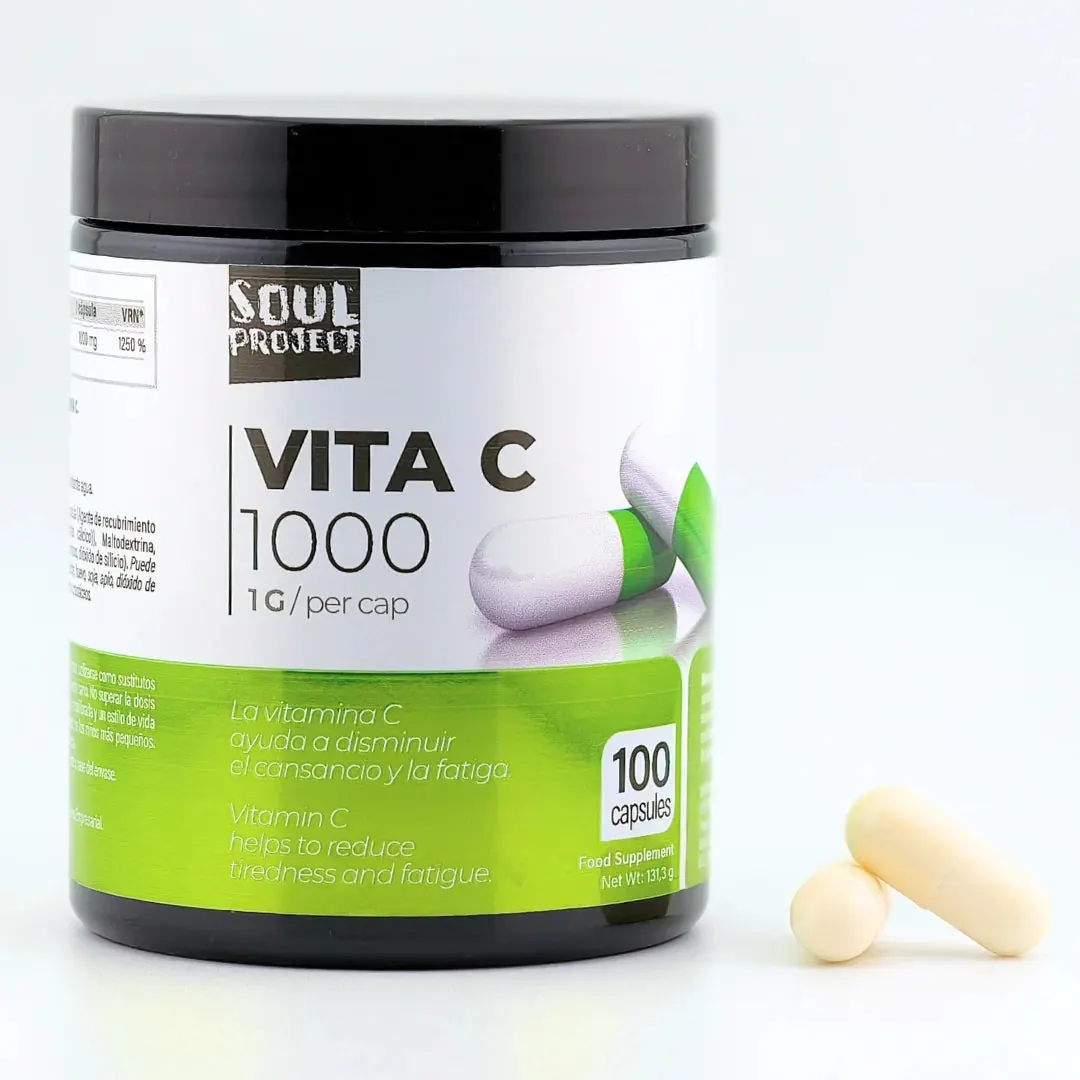
🍊 LifeXpan® High Dose Vitamin C 1000 mg
Pure vitamin C (L-ascorbic acid) in a high dose, which contributes to the normal function of the immune system, to normal collagen formation, and to the reduction of tiredness and fatigue. One capsule a day, with plenty of water, preferably with meals.
☀️ LifeXpan® Vitamin D3 + K2 (MenaQ7®)
Vitamin D3 combined with vitamin K2 in its MK-7 form (MenaQ7®), with high bioavailability. It contributes to the normal function of the immune system, to the maintenance of normal bones, and to normal blood clotting. One capsule a day, preferably with a meal containing fat.
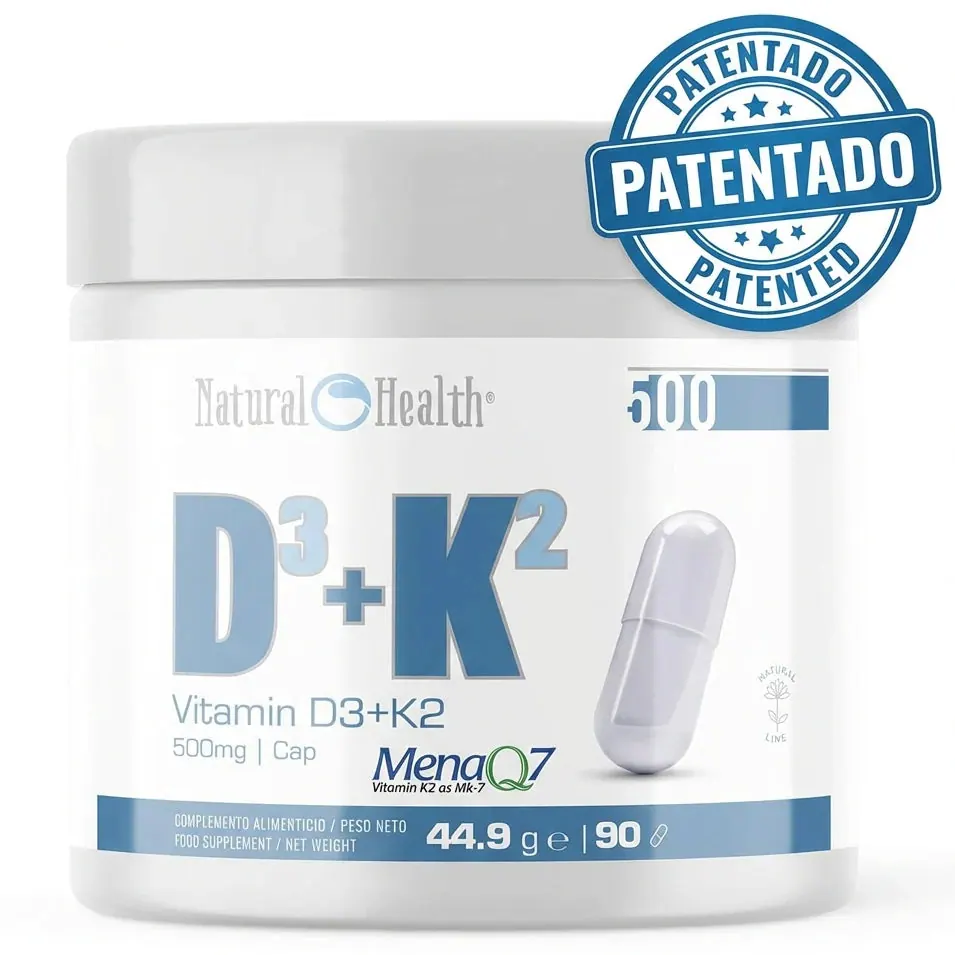
MenaQ7® is a registered trademark of Gnosis by Lesaffre.
Scientific references
Commission Regulation (EU) No 432/2012 establishing a list of permitted health claims made on foods (claims on vitamin C and vitamin D). EUR-Lex
NIH Office of Dietary Supplements — Vitamin D: Fact Sheet for Health Professionals (cutaneous synthesis of vitamin D from UVB radiation). NIH ODS
Quesada Gómez JM, et al. Vitamin D deficiency in Spain: reality or myth? Revista de Osteoporosis y Metabolismo Mineral. SciELO
Educational information on ingredient mechanisms. This does not constitute an unauthorised health claim. Food supplements should not be used as a substitute for a varied, balanced diet.