
 MXN
 Spain & Europe · EUR
 United States · USD
How melatonin works in the mitochondria and shapes your longevity
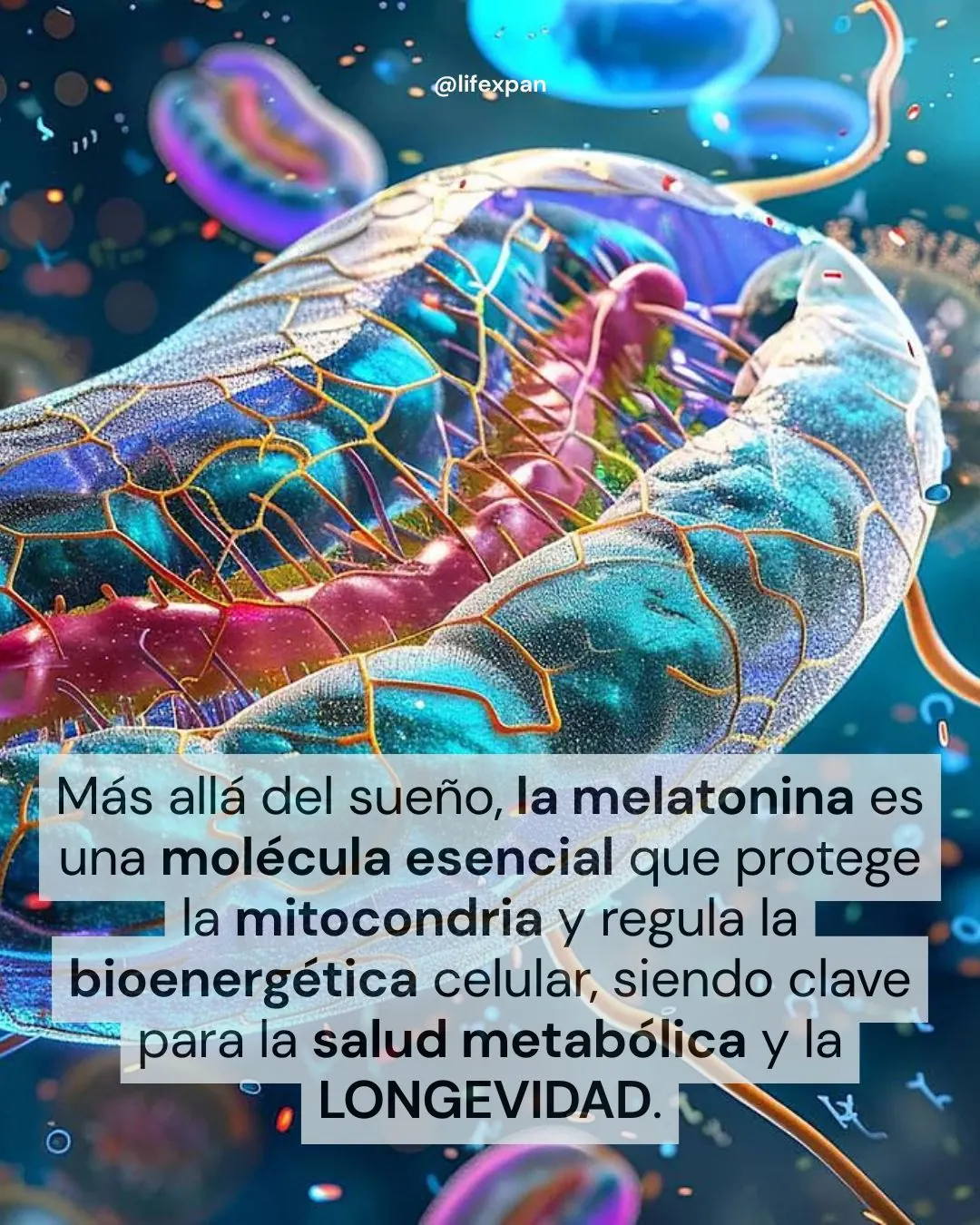
For decades, science taught us that melatonin was simply the "sleep hormone", a chemical signal telling the body that night has fallen. However, the most recent research has turned this perception completely on its head. We now know that melatonin is, in fact, a ubiquitous and fundamental regulatory molecule for cellular survival, with a presence that stretches back to the very origins of biological life.
In fact, its production in the gastrointestinal tract, retina and bone marrow far exceeds that of the pineal gland. But the most fascinating discovery isn't in the quantity, but in its destination: the mitochondria.
Understanding the link between melatonin and mitochondria opens the door to a new understanding of metabolic health and ageing. In this article, we'll explore how this molecule acts as the central axis of our bioenergetics and why its deficiency is a critical factor in biological decline.
The Mitochondrial Axis: The engine of life
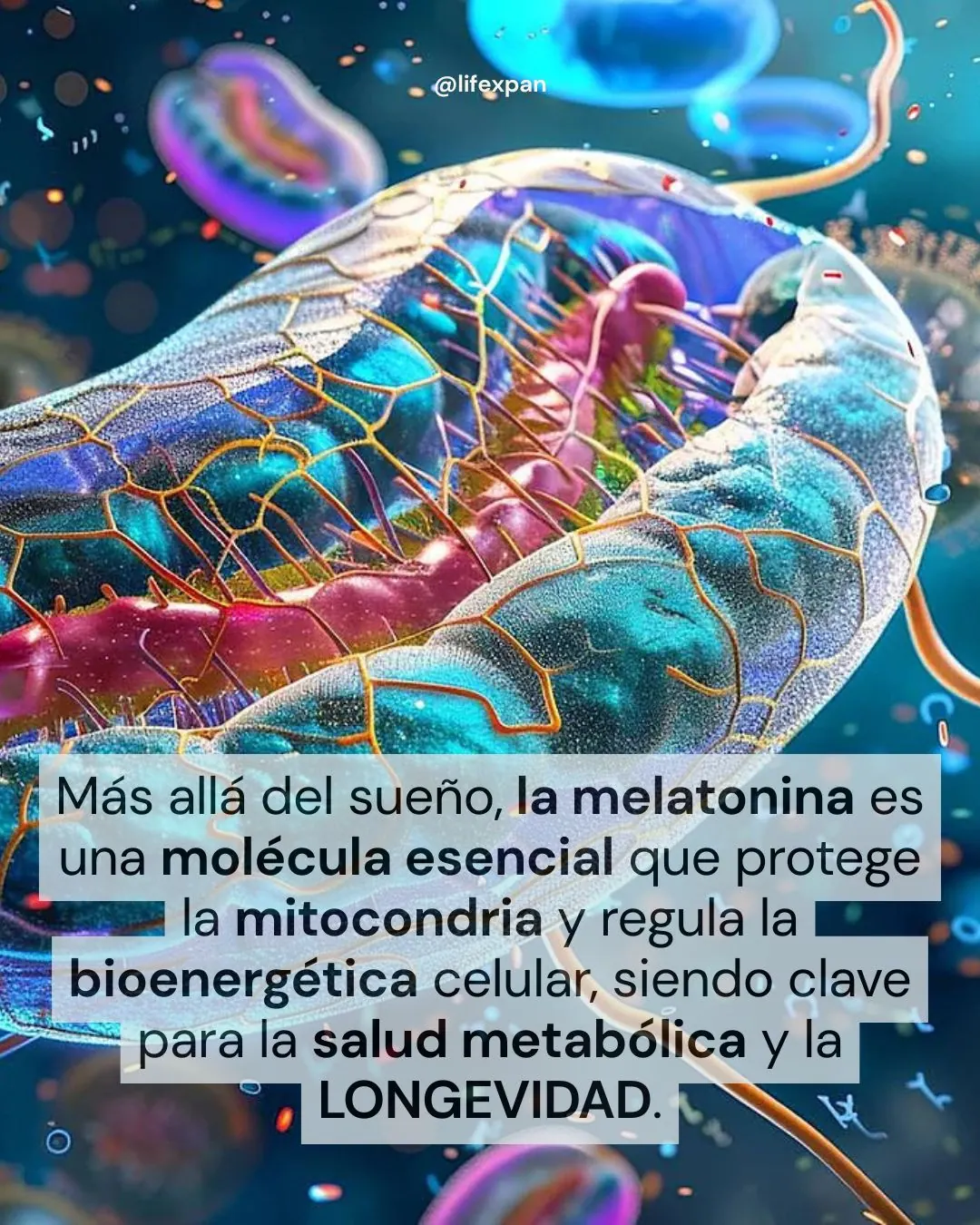
To understand longevity, we need to understand the mitochondria. These organelles not only produce the energy (ATP) that allows us to move, think and breathe, but they are also the main site of free radical (ROS) production. This is where the paradox of life lies: to produce energy, our cells must "burn" fuel, and this process generates oxidative waste that, if left unchecked, destroys the very factory producing the energy.
Melatonin has an exceptional affinity for mitochondria. Unlike other antioxidants that struggle to cross cell membranes, melatonin enters with ease and accumulates at much higher concentrations than in the blood. It isn't there by chance; it's there to orchestrate bioenergetics.
Optimising the energy factory
Melatonin doesn't just clear away waste; it improves the efficiency of energy production. It interacts directly with the complexes of the electron transport chain, stabilising cardiolipin — an essential lipid of the inner mitochondrial membrane. By doing this, it reduces electron "leakage", meaning we produce more energy with less collateral damage (fewer free radicals).
The Mitochondrial Quality Control system (MQC)
Longevity depends on our cells' ability to keep their engines clean and functional. Melatonin regulates what science calls the MQC, which is based on three critical processes:
- Biogenesis: It stimulates the creation of new mitochondria via the PGC-1\alpha pathway. It's like fitting new engines into an old car.
- Dynamics (Fusion and Fission): It regulates how mitochondria join together to share resources or split apart to isolate damaged parts.
- Mitophagy: This is perhaps the most relevant point for longevity. When a mitochondrion is too damaged to function, melatonin triggers its selective removal. This stops the defective organelle from releasing cell death signals (apoptosis) and damaging neighbouring cells.
Why and when should we take melatonin?
Despite its critical importance, our body's ability to produce melatonin is neither infinite nor constant. There are specific scenarios where supplementation becomes not just useful, but necessary to preserve the mitochondrial axis.
1. The "Age Gap" (Immunosenescence)
As we age, melatonin production declines dramatically. This decline is one of the markers of biological ageing and is directly linked to the loss of mitochondrial mass and the weakening of the immune system. A person over 50 produces only a fraction of the melatonin they produced at 20, leaving their mitochondria vulnerable to chronic oxidative stress.
2. Disruption of the Circadian Rhythm and Blue Light
We live in an age of "light pollution". Exposure to blue light from screens and LED bulbs at night inhibits pineal melatonin secretion. People who work night shifts, suffer from jet lag or have irregular sleep habits show a persistent functional deficiency that affects their cellular recovery.
3. Chronic Inflammation and Gut Health
If you suffer from intestinal permeability, gastro-oesophageal reflux (GORD) or systemic inflammation, your gut melatonin levels may be compromised. Melatonin is crucial for maintaining the tight junctions of the gut; without it, toxins leak into the bloodstream, increasing the oxidative burden on mitochondria throughout the body.
4. Neurodegenerative and Metabolic Diseases
In cases of early diagnosis of Alzheimer's, Parkinson's or even insulin resistance, the demand for mitochondrial antioxidants outstrips endogenous production. Here, melatonin is used to stabilise the respiratory chain and prevent neuronal death.
Why does the format matter? Why liquid melatonin?
Research highlights a common problem: melatonin in tablet form has very low bioavailability (barely 15%) because the liver breaks it down before it reaches the bloodstream.
The sublingual spray or nanoemulsion format is at the forefront of this field. Absorbed through the mucosa of the mouth, melatonin enters the bloodstream directly, reaching peak concentrations up to twice as fast as a tablet. This allows lower doses to be used with much more potent, direct effects on the mitochondrial axis.
Synergies for Longevity
To boost melatonin's effect on bioenergetics, science suggests combining it with specific co-factors:
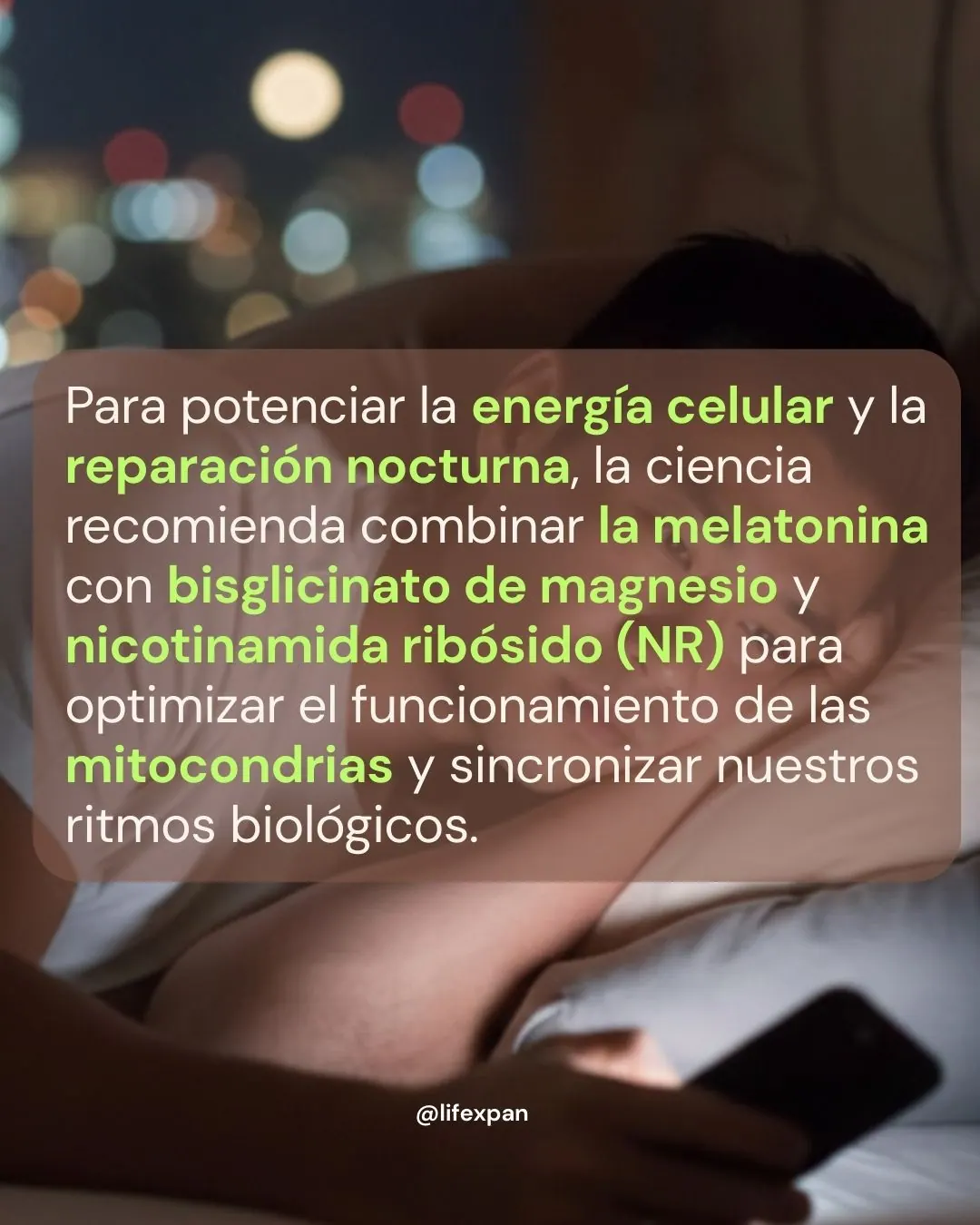
- Magnesium Bisglycinate: This is the necessary co-factor for synthesising melatonin. Magnesium also relaxes the nervous system, allowing melatonin to focus on its job of mitochondrial repair during sleep.
- Nicotinamide Riboside (NR): NR raises NAD+ levels, the fuel of the mitochondria. Together, NR and melatonin act on epigenetic clocks, helping to synchronise the circadian rhythms of organs such as the liver and brain.
Conclusion
Melatonin is not a sedative; it's a molecule of biological maintenance. Acting as the central axis of mitochondrial health, it ensures our cells produce energy cleanly and efficiently. Keeping optimal levels of this substance is, in essence, protecting our bioenergetics against the wear of time.
If you're pursuing longevity, don't just look at how much you sleep, but how your mitochondria are doing. And in that battle for energy and life, melatonin is one of your best biochemical allies.
Sources used
Melatonin as a mitochondrial protector in neurodegenerative diseases
Melatonin: Buffering the Immune System
Melatonin, Immune Function and Cancer
The potential therapeutic effect of melatonin in gastro-esophageal reflux disease.
The potential therapeutic effect of melatonin in gastro-esophageal reflux disease.
The potential influence of melatonin on mitochondrial quality control: a review.
Melatonin—A Powerful Antioxidant in Neurodegenerative Diseases.
This week only, LAUNCH OFFER -20% Liquid Melatonin 50 ml

Energy